Is It Cheaper to Charge an EV Overnight in New Zealand?
EV Chargers Hamilton, operated by 2E Electrical
Published 15 November 2026Last updated 15 November 2026
The Short Answer: Yes, It Is Significantly Cheaper
Charging your electric vehicle (EV) at home overnight is almost always the most cost-effective way to power your car in New Zealand. By taking advantage of off-peak electricity rates offered by many retailers, you can reduce your charging costs to a fraction of what you would pay at a public DC fast charger.
While public fast charging is convenient for long trips, it is designed for speed rather than economy. Home charging allows you to tap into lower electricity tariffs that typically apply during the night, when overall demand on the national grid is lower.
How Electricity Plans Influence Your Costs
New Zealand electricity retailers offer several types of plans specifically designed for EV owners. These plans generally fall into three categories:
- Half-Price Overnight Plans: Retailers like Contact Energy (Good Charge) and Genesis (EVHome) offer significantly reduced rates (often 50% off) during a set window, typically 9pm to 7am.
- Night Rate Plans: Some providers offer a lower, fixed night rate during off-peak hours, which can be highly competitive compared to standard daytime pricing.
- Free Hour Plans: Plans like Electric Kiwi’s 'Hour of Power' or Contact’s 'Good Nights' provide a window of free electricity. If you have a smart charger or a vehicle that supports scheduled charging, you can time your charging session to coincide with these free periods.
To get the most out of these plans, you need a communicating smart meter installed at your property. If you are unsure which plan suits your driving habits, the Electricity Authority’s 'Billy' tool is a helpful, independent resource for comparing options.
Home Charging vs. Public Charging
The cost difference between home and public charging is substantial. According to EECA, charging at home off-peak is significantly cheaper than using public infrastructure. While public DC fast chargers are essential for long-distance travel, they often cost several times more per kilowatt-hour (kWh) than a residential night rate. By shifting your charging to your home, you avoid the premium pricing associated with the high-speed equipment and convenience of public charging stations.
The Role of Smart Charging
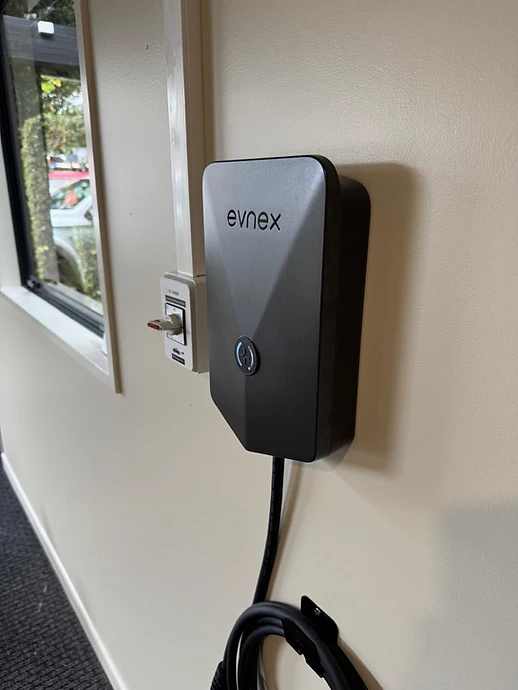
While you can charge an EV using a standard 3-pin plug, it is slow and not designed for daily use. A dedicated wall-mounted smart charger is the most efficient way to manage your costs. Smart chargers allow you to:
- Schedule charging: Automatically start and stop your charge to match your electricity provider's cheapest off-peak window.
- Manage load: Ensure your home's electrical capacity is not exceeded, preventing the need for expensive switchboard upgrades in some cases.
- Integrate with solar: If you have solar panels, some smart chargers can prioritise using your own generated electricity to charge your car, further reducing your reliance on the grid.
Practical Considerations for Hamilton Homeowners
Before installing a charger, it is important to assess your home's electrical capacity. A licensed electrician should inspect your switchboard to ensure it can safely handle the additional load of an EV charger. In some cases, dynamic load management can be used to balance the power draw between your charger and other high-demand appliances like your oven or hot water cylinder, ensuring you don't blow a fuse during peak usage times.
Need an EV charger installed in Hamilton or the Waikato? 2E Electrical can assess your property, help you choose the right charging solution and professionally install and commission your EV charger. Request an EV Charger Assessment at /#assessment.
Frequently Asked Questions
Yes, charging at home is consistently cheaper than using public DC fast chargers. The savings are maximised when you switch to an EV-specific electricity plan that offers lower rates during overnight hours.
While you don't strictly need a smart charger to access off-peak rates, it makes the process much easier. A smart charger can be programmed to start and stop automatically, ensuring you only draw power during the cheapest times without you needing to wake up or manually manage the settings.
If you have a solar system, you can potentially charge your EV for free or at a very low cost by using your own generated power. Some smart chargers can be configured to 'solar-match,' meaning they only draw power from the grid when your solar production is insufficient, prioritising your own clean energy first.
Look at your current electricity usage and your daily driving habits. If you drive long distances and need a full charge every night, a half-price overnight plan is likely best. If you have a shorter commute, a plan with a free hour of power might be sufficient to top up your battery.