
Do You Need Three-Phase Power for an EV Charger?
EV Chargers Hamilton, operated by 2E Electrical
Published 11 October 2026Last updated 4 November 2026

Understanding Your Power Supply
For the vast majority of residential EV charging installations in Hamilton and the Waikato, you do not need three-phase power. Most New Zealand homes operate on a single-phase supply, which is perfectly capable of supporting a standard 7kW EV charger. This power level is the 'sweet spot' for home charging, allowing you to comfortably charge most electric vehicles overnight.
Three-phase power is more common in commercial settings, industrial workshops, or some larger, modern residential properties. While it offers higher potential power delivery, it is rarely a requirement for residential EV charging.
Single-Phase vs. Three-Phase Charging
To understand why you likely don't need three-phase power, it helps to look at how these systems differ in an EV context:
- Single-Phase (230V): This is the standard supply for most NZ homes. A single-phase EV charger typically delivers up to 7kW of power. This is sufficient to add significant range to your vehicle while you sleep.
- Three-Phase (400V): This supply can support chargers capable of 11kW or 22kW. While these chargers are faster, they are limited by the vehicle's own onboard charger. Most electric vehicles sold in New Zealand are limited to an 11kW AC charging rate, meaning a 22kW charger will often provide no extra speed for the average passenger car.
When Might You Consider Three-Phase?
While single-phase is sufficient for most, there are specific scenarios where a three-phase installation might be beneficial:
- Future-Proofing: If you are building a new home or undertaking a major renovation, installing a three-phase supply can provide extra capacity for future high-demand appliances, including high-speed EV charging.
- Commercial or Fleet Needs: If you are managing a fleet of electric vans or utes in a depot setting, three-phase power is often necessary to support multiple chargers operating simultaneously without overloading the site's electrical capacity.
- Specific Vehicle Requirements: Some high-performance EVs or larger vehicles may be able to take advantage of higher AC charging rates, though this remains the exception rather than the rule for residential users.
The Importance of a Professional Assessment
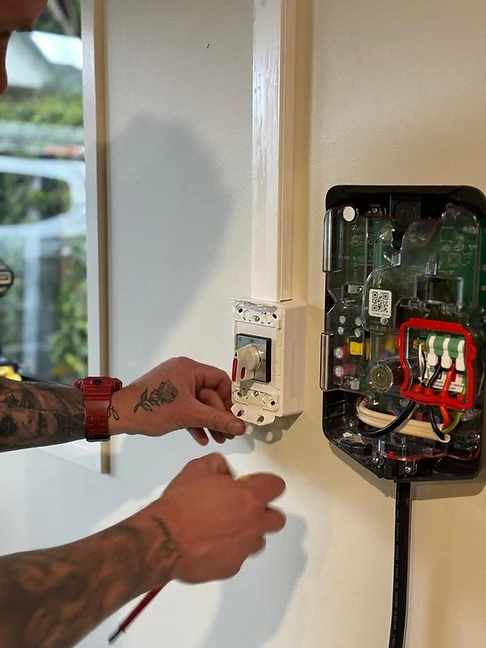
Before deciding on a charger, the most important step is an electrical capacity assessment. At 2E Electrical, we don't just install the hardware; we evaluate your switchboard and existing load to ensure your home's electrical system can safely handle the new demand.
If your home is on a single-phase supply, we can often implement smart charging solutions or dynamic load management. These systems monitor your home's total energy usage in real-time and adjust the EV charger's output to prevent your main fuse from blowing, ensuring you get the fastest possible charge without needing an expensive supply upgrade.
Frequently Asked Questions
It depends on your car's onboard charger. Most EVs in New Zealand are limited to 7kW or 11kW AC charging. If your car is limited to 7kW, a three-phase charger will not charge it any faster than a standard single-phase unit.
Check your switchboard. A three-phase main switch is typically larger and wider than a single-phase switch, often labeled with three poles. If you are unsure, our team can confirm your supply type during an on-site assessment.
Yes, but it is a significant electrical project involving your local network provider and a switchboard upgrade. For most homeowners, the cost of this upgrade outweighs the benefits of faster charging, especially when smart charging can manage your load effectively on a single-phase supply.